
The promise of being able to hire robots has been dangling in front of entrepreneurs and executives for decades. We’ve been told that automation will revolutionize operations, slash costs, and transform customer experiences. Yet despite the hype and billions in investment, the reality for most businesses remains frustratingly out of reach.
While the global robotics market is projected to reach $73 billion by 2029, the harsh truth is that traditional robotics solutions remain too complex and impractical for most businesses to hire robots effectively. It’s time to confront this reality head-on and explore a fundamentally different approach that’s already changing how forward-thinking companies think about automation.
The Great Robotics Promise That Never Delivered
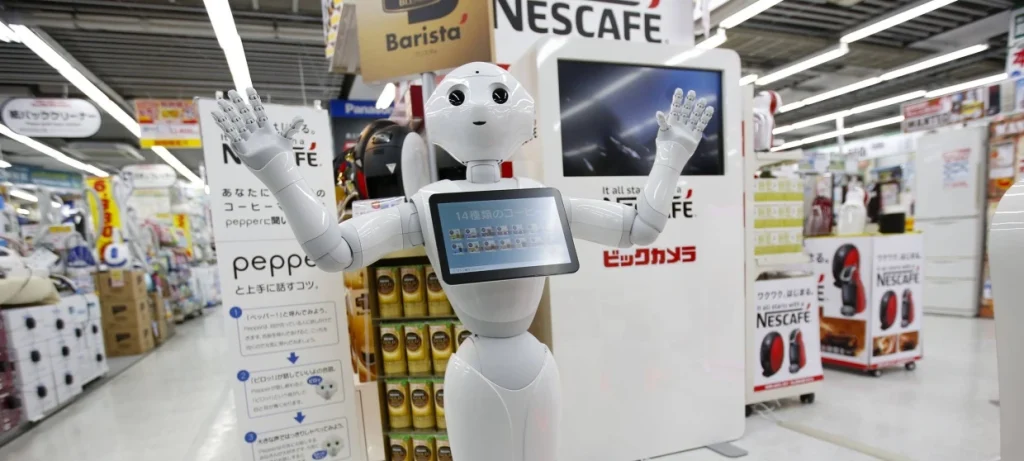
Walk into any trade show or read any industry publication, and you’ll be bombarded with impressive demonstrations of robotic capabilities. Warehouse robots efficiently moving packages, humanoid assistants greeting customers, and industrial arms performing precise manufacturing tasks. The technology is undeniably impressive, but there’s a massive disconnect between what’s possible in controlled demonstrations and what’s practical for real businesses.
The numbers tell a sobering story. Despite decades of development, robot adoption remains concentrated among large corporations with deep pockets and dedicated engineering teams. Small and medium-sized enterprises (SMEs), which represent over 90% of businesses globally, continue to be locked out of the ability to hire robots that was supposed to democratize productivity.
The Hidden Costs That Kill ROI
The sticker price of a robot is just the beginning. The adoption of industrial robots by SMEs is still hampered by high initial investment and total cost of ownership. But the real killer isn’t just the upfront cost—it’s everything that comes after.
Infrastructure Overhaul
Most robots for businesses require significant infrastructure modifications. Factories may need to build segregated work areas or additional backup power units before a robot can be deployed. That’s not to mention peripheral technology, such as sensors, variable robot grippers and any necessary mounting apparatus. A $50,000 robot suddenly becomes a $200,000 project when you factor in facility modifications, safety systems, and supporting technology.
The Integration Nightmare
Unlike software that can be deployed with a few clicks, physical robots require extensive integration work. Every business environment is unique, with different layouts, workflows, and requirements. What works perfectly in a demonstration often requires months of customization to function in the real world. This integration process typically requires specialized engineers, consultants, and extensive downtime during implementation.
Maintenance and Support Costs
Some components, for instance, need high-precision grinding machines that are limited in number, which makes it difficult to ramp up production. Costs for some components are still high because of limited industrial capacity or long manufacturing cycle times. Physical robots break down, wear out, and require regular maintenance by trained technicians. For many businesses, the ongoing support costs can exceed the initial purchase price within a few years.
The Skills Gap Problem
Perhaps most critically, traditional robots for businesses require specialized knowledge to operate and maintain. High implementation costs and a lack of internal knowledge are major roadblocks to growth, especially for smaller robotics companies. Most businesses don’t have robotics engineers on staff, creating a dependency on external support that further drives up costs and complexity.
Why Current Solutions Miss the Mark
The fundamental problem with traditional robotics approaches is that they’re solving the wrong problem. The industry has been obsessed with creating impressive physical machines that can perform complex tasks, but they’ve ignored the practical realities of business deployment.
The Humanoid Fallacy
The latest trend toward humanoid robots represents perhaps the most extreme example of this misdirection. Purpose-built robots will outperform humanoids in nearly every industrial application. Task-Specific Robots: Expect domain-focused robots (cleaning, logistics, agriculture, security) to outscale humanoids Yet billions continue to be poured into developing expensive humanoid platforms that offer little practical advantage over simpler, more focused solutions.
The Mobility Myth
Many robotics companies have convinced themselves that physical mobility is essential for business applications. But for the vast majority of customer-facing roles—reception, information services, sales assistance—mobility is irrelevant. A customer service robot doesn’t need to walk around; it needs to communicate effectively and solve problems.
The Over-Engineering Trap
Traditional robotics solutions are engineering marvels, but they’re over-engineered for most business applications. A robot that can lift 50 pounds and navigate complex terrain is impressive, but completely unnecessary for answering customer questions or processing appointments.
The Spatial Revolution: Intelligence Without the Overhead
While the robotics industry has been chasing increasingly complex hardware solutions, a quieter revolution has been brewing. Spatial agents represent a fundamentally different approach that delivers the benefits of robots for businesses without the crushing costs and complexity.


What Makes Spatial Agents Different
Instead of building expensive physical robots, spatial agents leverage existing hardware—tablets, kiosks, displays—that businesses already own or can acquire affordably. The magic happens in the software layer, where lifelike AI agents provide the human-like interaction that customers want without the mechanical complexity that businesses can’t afford.
This isn’t a compromise; it’s a revelation. By separating the intelligence from the expensive physical infrastructure, spatial agents solve the core business problem—providing intelligent, consistent customer service—while eliminating the barriers that have kept traditional robots out of reach for most companies.
Real-World Deployment Advantages
The difference in deployment complexity is staggering. While traditional robots require months of planning, facility modifications, and specialized installation, spatial agents can be deployed in minutes. Any tablet or digital display can become an intelligent customer service agent with nothing more than an internet connection.
This deployment simplicity transforms the business case entirely. Instead of a six-figure capital expenditure requiring board approval and extensive planning, spatial agents represent a manageable monthly expense comparable to hiring a part-time employee—but one that never calls in sick, doesn’t require benefits, and works 24/7.
Scalability Without Complexity
Traditional robots for businesses face significant scaling challenges. Each additional robot requires proportional infrastructure investment, maintenance capacity, and operational complexity. Spatial agents scale effortlessly through software, allowing businesses to deploy dozens of agents across multiple locations without any increase in physical infrastructure or maintenance overhead.
The Economics That Actually Work
The financial model for spatial agents represents a complete departure from traditional robotics economics. At approximately $60 per month per agent, the total cost of ownership aligns with real business budgets while delivering immediate value.
Immediate ROI Calculation
Consider a typical small business scenario: hiring a part-time receptionist costs roughly $1,500-2,000 per month when including wages, benefits, and payroll taxes. A spatial agent delivers similar functionality for $60 per month—a 97% cost reduction—while providing superior consistency and availability.
No Hidden Costs
Unlike traditional robots that come with significant hidden costs, spatial agents operate on existing hardware with predictable monthly pricing. There are no maintenance contracts, no specialized technicians, no facility modifications, and no integration projects. The total cost of ownership is transparent and manageable.
Risk-Free Deployment
Perhaps most importantly, spatial agents allow businesses to experiment with automation without betting the company. The low cost and simple deployment mean businesses can test, learn, and iterate without significant financial risk. If an application doesn’t work out, the monthly commitment can be cancelled without losing a massive capital investment.
Beyond Cost: Why Intelligence Matters More Than Mobility
The spatial agent approach reveals a crucial insight that the robotics industry has largely missed: for most business applications, intelligence is infinitely more valuable than physical capabilities.
Customer Experience Focus
Customers interacting with business automation don’t care whether the system has robotic arms or wheels. They care about getting their questions answered, their problems solved, and their needs met efficiently. Spatial agents excel at these fundamentally cognitive tasks while traditional robots remain focused on physical manipulation that’s often irrelevant to customer service.
Natural Interaction Paradigms
The lifelike presentation and natural conversation capabilities of spatial agents create more comfortable and effective customer interactions than most physical robots. Without the uncanny valley effects and mechanical limitations of physical robots, spatial agents can focus entirely on communication and problem-solving.
Adaptive Learning
Unlike traditional robots that require programming for specific tasks, spatial agents learn about businesses through natural conversation. This learning capability means they become more valuable over time, developing specialized knowledge about products, services, and processes without requiring technical programming.
Industry Applications Driving Adoption
The versatility of spatial agents is enabling automation across industries that were previously excluded from robotics solutions due to cost and complexity constraints.
Retail and Hospitality
Small retailers and restaurants can now afford intelligent customer service automation. Spatial agents can provide product information, handle reservations, process simple transactions, and even upsell services—all capabilities that were previously available only to large chains with substantial technology budgets.
Healthcare and Professional Services
Medical clinics, law offices, and consulting firms can deploy spatial agents for patient check-ins, appointment scheduling, and basic information services. The professional presentation and natural communication abilities make them suitable for environments where traditional robots would seem out of place.
Corporate and Office Environments
Even small companies can now have sophisticated reception and visitor management capabilities. Spatial agents can handle building directories, visitor registration, and basic administrative tasks while maintaining the professional appearance expected in corporate settings.
The Technical Reality Behind the Simplicity
The apparent simplicity of spatial agents masks sophisticated technical capabilities that address the real challenges businesses face with customer service automation.
Advanced Natural Language Understanding
Modern spatial agents employ cutting-edge AI models for natural language processing, enabling them to understand context, intent, and nuance in customer communications. This understanding goes far beyond simple keyword matching to provide genuinely helpful responses.
Multimodal Interaction Capabilities
Through integration with tablets and kiosks, spatial agents can handle voice, text, and visual interactions seamlessly. They can display information, process forms, generate QR codes for contact sharing, and coordinate with other business systems—all through intuitive interfaces that customers can use without training.
Addressing the Skeptics: Why This Isn’t Just Another Chatbot
Critics might dismiss spatial agents as glorified chatbots with animated faces, but this perspective misses the fundamental differences that make them genuinely transformative for business applications.
Presence and Engagement
The physical presence of spatial agents in business environments creates engagement levels that web-based chatbots simply cannot achieve. Customers naturally interact with the lifelike presentation, leading to higher engagement rates and more successful problem resolution.
Contextual Awareness
Unlike chatbots that exist in digital isolation, spatial agents operate in physical business environments where they can provide location-specific information, guide customers to appropriate areas, and coordinate with on-site staff when needed.
Professional Representation
The sophisticated presentation and communication capabilities of spatial agents allow them to represent businesses professionally in ways that simple chatbot interfaces cannot. They become genuine extensions of the business brand rather than obvious automation tools.
The Practical Implementation Path
For businesses ready to move beyond the limitations of traditional robotics, implementing spatial agents follows a straightforward path that minimizes risk while maximizing learning opportunities.
Start Small and Strategic
The beauty of the spatial agent approach is that businesses can start with a single deployment in a targeted application. Whether it’s front desk reception, product information in retail, or appointment scheduling in professional services, the low cost and simple setup enable focused experimentation.
Leverage Existing Infrastructure
Most businesses already own tablets, displays, or kiosks that can serve as platforms for spatial agents. This existing infrastructure investment can be repurposed for automation without additional hardware costs, making the initial deployment even more affordable.
Scale Based on Results
As businesses see results from initial deployments, spatial agents can be scaled across additional locations and applications. The software-based approach means scaling doesn’t require proportional increases in infrastructure or complexity.
Looking Forward: The Future of Business Automation
The spatial agent approach represents more than just a cost-effective alternative to traditional robots for businesses—it’s a glimpse into the future of how automation will actually integrate into business operations.
Intelligence-First Design
Rather than starting with physical capabilities and trying to add intelligence, spatial agents start with advanced AI capabilities and add just enough physical presence to create effective customer interactions. This intelligence-first approach aligns with where technology is heading and what businesses actually need.
Democratized Access
By removing the cost and complexity barriers that have limited robotics to large corporations, spatial agents democratize access to sophisticated automation. Small businesses can now compete with larger companies in terms of customer service capabilities and operational efficiency.
Evolutionary Advantage
As AI capabilities continue to advance rapidly, spatial agents can incorporate new features and improvements through software updates. Traditional physical robots, constrained by their hardware design, cannot adapt as quickly to technological improvements.
The Bottom Line for Business Leaders
The robotics industry has spent decades perfecting solutions that most businesses can’t afford to implement. Meanwhile, the real opportunities for automation lie in applications that don’t require expensive physical robots at all.
Spatial agents prove that the future of robots for businesses isn’t about creating more sophisticated machines—it’s about delivering intelligent automation in forms that businesses can actually adopt and afford. For the 99% of businesses that have been waiting for practical automation solutions, that future is already here.
The question isn’t whether your business can afford robots anymore. The question is whether you can afford to wait while your competitors gain the advantages of intelligent automation at a fraction of the traditional cost.
The robotics revolution was never really about the robots themselves—it was about what they could do for businesses. Spatial agents deliver on that promise in a way that traditional robots never could: simply, affordably, and immediately. For businesses ready to move beyond the limitations of conventional thinking, the path forward has never been clearer.