
The landscape of customer experience is undergoing a revolutionary transformation. Gone are the days when digital signage simply displayed static information or played looping promotional videos. Today, we’re witnessing the emergence of something far more sophisticated and engaging: the kiosk robot. This fusion of artificial intelligence, lifelike digital agents, and interactive technology is redefining how businesses connect with their customers, creating experiences that are both deeply personal and incredibly scalable.
Understanding the Kiosk Robot Revolution
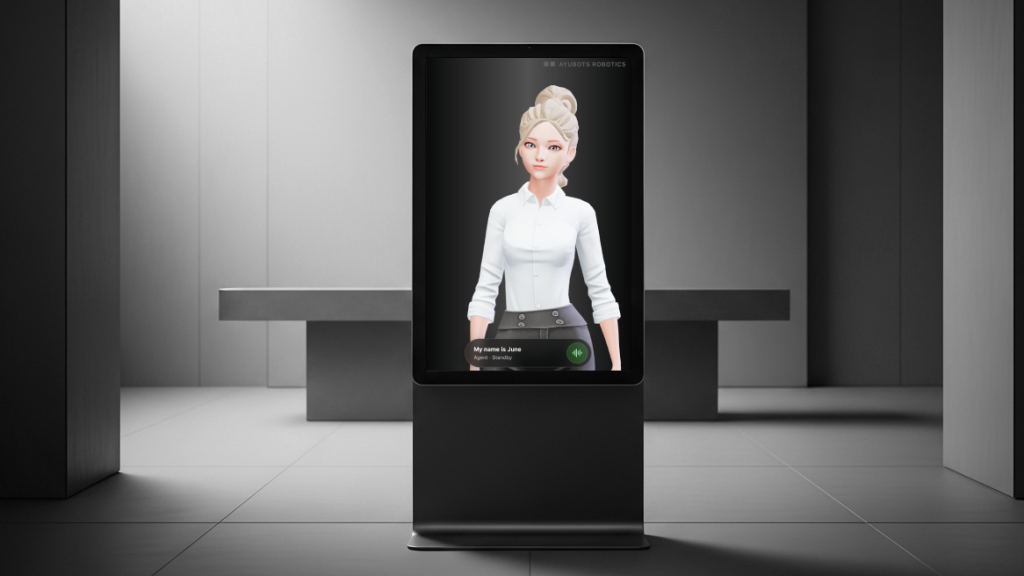
A kiosk robot represents the next evolution in customer service technology. Unlike traditional static displays or basic touchscreen interfaces, these intelligent systems combine the accessibility of digital kiosks with the conversational capabilities of advanced AI agents. Think of it as hiring a digital employee who never takes breaks, always maintains a friendly demeanor, and can handle multiple customers simultaneously while delivering consistent, brand-aligned experiences.
The concept centers around transforming any tablet, digital display, or interactive kiosk into a smart, responsive customer service point. These aren’t just programmed responses or rigid menu systems—they’re sophisticated kiosk robot solutions that understand natural language, recognize context, and can engage in meaningful conversations that feel surprisingly human.
The Technology Behind Modern Kiosk Robots
What makes a kiosk robot truly revolutionary is the integration of several cutting-edge technologies. At the core lies advanced natural language processing that enables these digital agents to understand and respond to customer inquiries just as a human employee would. But it goes far beyond simple question-and-answer functionality.
Modern kiosk robot platforms utilize lifelike 3D animated agents with expressive facial animations and real-time voice interaction. These spatial agents aren’t trying to fool customers into thinking they’re human—instead, they strike the perfect balance between being lifelike and authentically digital. The result is an interaction that feels natural and engaging without crossing into the uncanny valley.
The intelligence of these systems comes from their ability to learn and adapt. A kiosk robot doesn’t just follow pre-programmed scripts; it trains itself by engaging with business owners and managers, asking questions about products, services, and processes. This conversational learning approach means each agent becomes genuinely knowledgeable about the specific business it represents.
Transforming Customer Experience Across Industries
The versatility of kiosk robot technology makes it applicable across virtually every industry. In retail environments, these digital agents serve as always-available product experts, capable of providing detailed information about inventory, making personalized recommendations, and guiding customers to specific locations within a store.
Healthcare facilities are finding kiosk robot solutions invaluable for patient check-ins, appointment scheduling, and providing basic information about services. These systems can handle routine inquiries 24/7, freeing up human staff to focus on more complex patient care tasks while ensuring no visitor goes without assistance.
Corporate environments benefit from kiosk robot technology through sophisticated reception solutions. These digital receptionists can handle visitor management, provide building navigation, schedule appointments, and even conduct basic interviews or surveys. The consistency and availability of a kiosk robot ensures every visitor receives the same high-quality welcome experience, regardless of time of day or day of week.
Hotels and hospitality venues are leveraging kiosk robot platforms to enhance guest services. From check-in assistance to local recommendations and concierge services, these digital agents can handle multiple languages and provide detailed information about amenities and local attractions.
The Economic Revolution of Digital Employees
Perhaps one of the most compelling aspects of kiosk robot technology is its economic impact. Traditional staffing for customer-facing roles involves significant costs—salaries, benefits, training, scheduling, and the inevitable challenges of turnover. A kiosk robot, by contrast, operates at a fraction of these costs while providing consistent service quality.
The economics are striking: where hiring a full-time receptionist might cost a business $30,000-$50,000 annually, a kiosk robot solution can provide similar services for less than $1,000 per year. This isn’t about replacing human employees entirely—it’s about creating a hybrid approach where digital agents handle routine inquiries and tasks, while human staff focus on complex, relationship-building activities that require emotional intelligence and creative problem-solving.
Small businesses particularly benefit from this model. Many smaller operations have hesitated to invest in dedicated reception or customer service staff due to cost constraints. Kiosk robot technology makes professional customer service accessible to businesses of all sizes, leveling the playing field and enabling smaller companies to deliver experiences that rival larger competitors.
Beyond Simple Automation: True Intelligence in Action
What distinguishes a true kiosk robot from basic automated systems is its ability to take meaningful action. These aren’t just conversational interfaces—they’re capable digital employees that can complete tasks. Modern platforms enable agents to share contact information through QR codes, pull up relevant forms and documentation, schedule appointments, and even initiate more complex business processes.
The integration capabilities are extensive. A kiosk robot can connect with existing business systems, accessing inventory databases, appointment scheduling software, customer relationship management tools, and payment processing systems. This connectivity transforms the digital agent from a simple information provider into a capable business tool that can actually complete transactions and workflows.
The intelligence extends to knowing when to escalate issues to human staff. A well-designed kiosk robot understands its own limitations and can seamlessly hand off complex inquiries to appropriate human team members, complete with context about the customer’s needs and the conversation history.
Implementation and Scalability
One of the most attractive aspects of kiosk robot technology is its simplicity of implementation. Unlike complex robotic systems that require specialized installation and maintenance, these digital agents work through standard devices that most businesses already own or can easily acquire.
The deployment process is straightforward: create the agent, train it through conversational interactions, and deploy it on any compatible device. Whether using an iPad for counter-top interactions, a dedicated digital kiosk for lobby areas, or large displays for immersive experiences, the kiosk robot adapts to the available hardware.
Scalability is built into the platform architecture. Businesses can start with a single kiosk robot to test the concept and gradually expand to multiple locations or specialized agents for different departments. Each agent can be trained for specific roles—a retail agent might focus on product knowledge and sales, while a healthcare agent specializes in appointment scheduling and patient support.
The maintenance requirements are minimal compared to physical robotics. Software updates happen automatically, new capabilities can be added through app-like extensions, and the system continues learning and improving through ongoing interactions.
The Future of Customer Interaction
As we look ahead, the kiosk robot represents more than just a technological advancement—it’s a fundamental shift in how businesses think about customer service. The combination of AI intelligence, lifelike presentation, and practical functionality creates possibilities that were unimaginable just a few years ago.
The technology is evolving rapidly, with new capabilities being added regularly. Future developments might include enhanced emotional intelligence, more sophisticated task completion abilities, and even deeper integration with business systems. The goal isn’t to replace human interaction entirely, but to create a complementary system where digital and human employees work together to deliver exceptional customer experiences.
For businesses considering customer experience improvements, kiosk robot technology offers a unique value proposition: immediate deployment, consistent performance, scalable costs, and the ability to enhance rather than replace human capabilities. It’s not about choosing between digital and human—it’s about creating the optimal blend for each specific business context.
Embracing the Digital Workforce
The emergence of kiosk robot technology signals a new era in customer experience management. These sophisticated digital agents offer businesses the opportunity to provide consistent, intelligent, and engaging customer service at scale. Whether deployed as a single reception solution or scaled across multiple locations and roles, kiosk robot platforms represent a practical, cost-effective approach to enhancing customer interactions.
The question for modern businesses isn’t whether to adopt AI-powered customer service solutions, but rather how quickly they can implement them effectively. As customer expectations continue to evolve toward more immediate, personalized, and available service, kiosk robot technology provides a clear path forward—combining the efficiency of automation with the engagement of human-like interaction.
The future of customer experience is here, and it’s more accessible, intelligent, and impactful than ever before. The kiosk robot revolution is just beginning, and the businesses that embrace this technology early will find themselves at a significant competitive advantage in delivering the kind of customer experiences that build lasting relationships and drive growth.