
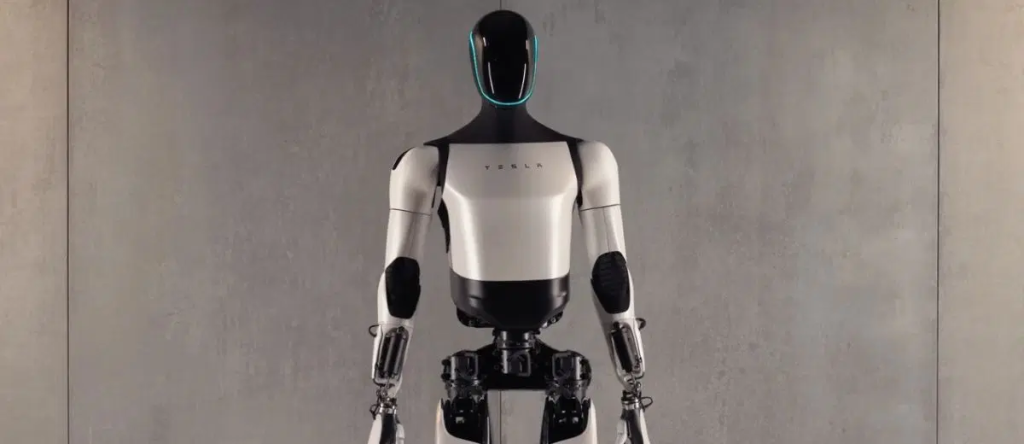
The humanoid robot revolution has been promised for years, and Tesla’s Optimus has emerged as one of the most high-profile contenders. With Elon Musk positioning it as central to Tesla’s future, claiming it could represent 80% of the company’s value, the hype is undeniable. But for small and medium-sized businesses looking for practical customer-facing solutions, particularly in conversational assistance roles, Tesla Optimus and similar humanoid robots present more problems than they solve.
The Price Tag Problem
Tesla projects that Optimus will cost between $20,000 and $30,000 when produced at scale, though current testing versions are priced significantly higher, around $140,000 to $150,000. Even at the lower projected price point, this represents a substantial capital investment for most businesses, equivalent to buying a brand-new vehicle, but with far less predictable returns.
For context, that $20,000-$30,000 doesn’t just cover the initial purchase. Unlike software solutions, physical robots require ongoing maintenance, parts replacement, and potential repairs. A broken actuator, damaged sensors, or battery degradation could add thousands in unplanned expenses. For a small retail store or medical clinic operating on tight margins, this represents a financial risk that’s hard to justify.
Hardware Complexity Nobody Talks About
Humanoid robots are engineering marvels, but that complexity becomes a liability in real-world business environments. Technical challenges persist at the component level, including battery capacity limitations that result in short operational times and high downtime. Imagine deploying a receptionist that needs to recharge every few hours, suddenly, your “24/7 solution” requires careful scheduling and backup plans.
The physical nature of humanoid robots also means they’re vulnerable to the chaotic realities of business spaces. A robot designed to walk and manipulate objects has dozens of moving parts, each representing a potential failure point. Spilled coffee, uneven flooring, unexpected obstacles, or even curious customers touching components could lead to malfunctions. Unstructured environments present particularly difficult challenges for robots to navigate, and most business spaces are far from the controlled factory floors where robots traditionally excel.
The Unpredictable Environment Factor
Here’s where the math gets truly challenging for businesses. Unlike a kiosk or digital display that sits safely in one location, a mobile humanoid robot operating in public spaces faces constant risk. If a customer accidentally knocks into your $25,000 robot and damages its walking mechanism or vision systems, you’re looking at repair costs that could run into thousands of dollars.
Replacement parts for sophisticated robots aren’t available at your local hardware store. Specialized components often need to be ordered from manufacturers, leading to extended downtime. During those repair periods, your business either operates without the assistant or falls back on human staff, negating the automation benefits you paid for.
The outdoor elements present another concern. Rain, extreme heat, dust, and humidity can all impact robot performance. Businesses with outdoor components or high-traffic entryways face additional environmental challenges that static solutions simply don’t encounter.
Why Conversational AI Doesn’t Need Legs
For businesses primarily interested in customer assistance, wayfinding, answering questions, or providing information, the question becomes obvious: why does your AI assistant need to walk?
The core value proposition, helping customers through conversation, doesn’t require mobility, manipulation, or physical presence beyond a screen. A receptionist who can answer questions, check appointments, provide directions, and engage naturally with visitors doesn’t need articulated limbs or the ability to navigate stairs. What matters is the intelligence, responsiveness, and personality of the interaction.
Enter the Kiosk Robots
This realization has given rise to a practical alternative that delivers the benefits of AI assistance without the complications of humanoid hardware: kiosk robots, or what we might call “Spatial Agents.”
Think of these as virtual AI employees housed in digital signage displays, tablets, or existing screens. They feature lifelike 3D animated agents with natural language understanding and expressive personalities, but without the mechanical complexity, maintenance headaches, or catastrophic failure risks of physical robots.
The concept is elegantly simple: deploy AI-powered assistants through screens that are already ubiquitous in modern businesses. These virtual agents can serve as receptionists, greeters, product guides, or customer service representatives—handling the exact conversational roles that businesses need, but through a medium that’s proven, reliable, and affordable.


Practicality over Tesla Optimus
Products like Spatial Agents are demonstrating what this category can achieve. This platform allows businesses to create customized AI employees that work through kiosks, tablets, or any digital display. The agents are designed to feel surprisingly human, expressive, natural, and engaging, while operating through technology that businesses already understand.
The operational model speaks for itself. At pricing starting around $60 per month per agent (roughly 10 cents per hour), businesses get 24/7 coverage without the capital expense or ongoing maintenance concerns of physical robots. There are no moving parts to break, no batteries to replace, no environmental vulnerabilities. A spilled drink might damage a tablet, but you’re replacing a $300 device, not a $25,000 robot.
More importantly, these solutions are available now. Not in theoretical production timelines or limited beta programs, but deployable today. Businesses can create their first agent, train it on their specific needs, and have it operational within days rather than years.
The Setup Reality Check
Deploying a humanoid robot requires space planning, safety assessments, charging infrastructure, and contingency plans for when it malfunctions. Deploying a kiosk-based AI agent requires mounting a screen and connecting to power and internet, infrastructure that virtually every modern business already has.
The training process is equally revealing. Teaching a physical robot to navigate your specific environment, recognize objects, and manipulate items safely requires extensive programming and testing. Training a virtual agent involves conversational interaction, you tell it about your business, your services, your common customer questions, and it learns.
What This Means for Your Business
If you’re a small or medium business owner evaluating customer-facing AI solutions, the path forward has become clearer. Humanoid robots like Optimus represent an exciting future, but not a practical present, especially for conversational assistance roles.
The technology that makes sense today combines the intelligence and personality of AI with the reliability and economics of digital displays. These spatial agents deliver what businesses actually need: helpful, engaging, always-available customer assistance without the complexity, risk, and cost of physical robotics.
The kiosk robot category isn’t waiting for batteries to improve or production to scale. It’s not grappling with the challenges of bipedal locomotion or object manipulation in unpredictable environments. It’s simply solving real business problems with proven technology, available now.
For businesses ready to bring AI into their customer experience, the question isn’t whether to wait for humanoid robots to mature. It’s whether to start benefiting from intelligent virtual agents today, at a fraction of the cost and none of the complexity.
The robot revolution is happening. It just looks different than the walking, talking machines we imagined—and that might be exactly what makes it practical.