
The digital transformation of customer service has reached a pivotal moment. While businesses have long struggled with the challenges of providing 24/7 support, managing customer expectations, and controlling operational costs, a new generation of AI help desk solutions is emerging that promises to change everything. At the forefront of this revolution are Spatial Agents — lifelike digital employees that are redefining what’s possible in customer support.
The Evolution of the AI Help Desk
Traditional help desk solutions have always been constrained by human limitations: working hours, fatigue, inconsistent service quality, and the ever-increasing cost of labor. Even the most sophisticated chatbots and text-based AI systems have fallen short of delivering the human touch that customers crave. This gap between automation and authentic human interaction has left businesses searching for a better solution.
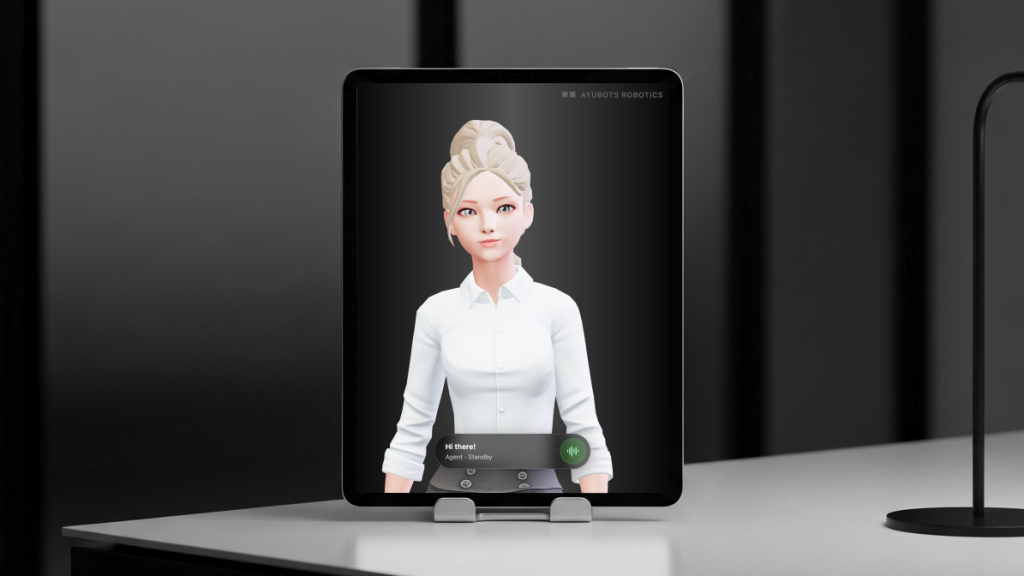
Enter the era of spatial AI agents—a breakthrough in AI help desk technology that combines the reliability of automation with the warmth and authenticity of human interaction. These aren’t your typical chatbots or voice assistants. Instead, they’re lifelike 3D animated agents that can see, hear, speak, and respond to customers with remarkable human-like qualities while maintaining the consistency and availability that only AI can provide.
What Makes Today’s AI Help Desk Different
If your previous experience with AI customer service involved frustrating chatbots that couldn’t understand your needs, you’ll be surprised by how far the technology has evolved. Modern AI help desk solutions, particularly spatial AI agents, represent a completely different approach to automated customer service.
Real-World Applications Across Industries
The versatility of spatial AI agents as AI help desk solutions makes them invaluable across numerous industries and use cases:
Retail Environments: In shopping centers and stores, these digital employees serve as knowledgeable product guides, helping customers find specific items, providing detailed product information, and even making personalized recommendations based on customer preferences. They can handle multiple languages, work during peak hours without fatigue, and maintain consistent brand messaging across all customer interactions.
Healthcare Facilities: Hospitals and clinics are deploying AI help desk agents to assist with patient check-ins, provide directions within complex medical facilities, answer common questions about procedures and policies, and help manage appointment scheduling. This reduces wait times and frees up human staff to focus on more critical patient care tasks.
Corporate Offices: Modern office buildings use spatial AI agents as sophisticated reception systems that can greet visitors, verify appointments, provide building information, and even conduct basic security protocols. They create professional first impressions while ensuring that human receptionists can focus on more complex visitor needs.
Hospitality Industry: Hotels are implementing AI help desk solutions to provide guests with instant access to concierge services, local recommendations, room service information, and facility details. These digital concierges never sleep, ensuring guests can get assistance whenever they need it.
The Technical Advantages of Modern AI Help Desk Systems
What makes today’s spatial AI agents so effective as AI help desk solutions goes far beyond their visual appeal. These systems incorporate several key technological advantages:
Natural Language Understanding: Advanced AI processing allows these agents to comprehend not just what customers are saying, but what they mean. They can handle complex queries, understand context from previous interactions, and even pick up on subtle emotional cues that inform their responses.
Continuous Learning Capabilities: Unlike static customer service systems, modern AI help desk agents learn and improve over time. They can be trained on company-specific information, policies, and procedures, and they adapt their responses based on successful interactions and customer feedback.
Seamless Integration: These AI help desk solutions can connect with existing business systems, customer databases, and operational tools. This means they can access real-time information, process transactions, and even escalate issues to human team members when necessary.
Multi-Modal Interaction: Customers can interact with these agents through speech, touch, or even gestures, making the experience more intuitive and accessible for people with different communication preferences or abilities.
Measurable Business Impact
Organizations implementing spatial agents as their AI help desk solution are seeing significant measurable improvements across key performance indicators:
Cost Efficiency: With operational costs as low as $0.10 per hour compared to traditional staffing, businesses can maintain round-the-clock AI help desk support at a fraction of previous costs. This dramatic reduction in operational expenses allows companies to reallocate resources to other growth initiatives.
Consistency in Service Quality: Human employees have good days and bad days, but spatial agents deliver the same high-quality AI help desk experience every single time. This consistency helps build stronger brand trust and customer satisfaction.
Scalability: During peak seasons or unexpected demand spikes, spatial agents can handle increased customer volume without additional hiring, training, or resource allocation. Your AI help desk scales instantly to meet demand.
Data Collection and Analytics: Every interaction with spatial agents generates valuable data about customer preferences, common questions, and service gaps. This information helps businesses make informed decisions about product development, service improvements, and AI help desk optimization.
Addressing Common Concerns
Despite the obvious advantages, some businesses remain hesitant about implementing AI help desk solutions. Common concerns include fears about customer acceptance, technology complexity, and the potential for replacing human workers entirely.
Customer acceptance has proven to be remarkably high when AI help desk agents are implemented thoughtfully. The key is ensuring that these digital employees complement rather than completely replace human staff. The most successful implementations use AI agents to handle routine inquiries and initial customer contact, while human employees focus on complex problem-solving and relationship building.
Technology complexity is another concern that proves largely unfounded with modern spatial AI agents. Today’s solutions are designed with plug-and-play simplicity in mind. They can be deployed on existing tablets, kiosks, or digital displays without requiring extensive technical infrastructure or specialized IT knowledge.
The Human-AI Collaboration Model
The most effective AI help desk implementations don’t replace human workers—they enhance human capabilities. Spatial AI agents excel at handling routine inquiries, providing instant responses to common questions, and managing high-volume, repetitive tasks. This frees human employees to focus on complex problem-solving, relationship building, and situations that require empathy, creativity, or specialized expertise.
This collaborative approach creates a win-win scenario: customers get immediate assistance for simple needs and expert human support for complex issues, while employees can focus on more meaningful, challenging work that fully utilizes their skills and experience.
Looking Toward the Future
As AI technology continues advancing, the capabilities of AI help desk solutions will only expand. We can expect to see improvements in emotional intelligence, more sophisticated problem-solving abilities, and even greater integration with business systems and processes.
The businesses that adopt these technologies early will have significant competitive advantages in customer satisfaction, operational efficiency, and cost management. As customer expectations continue to rise and operational costs increase, AI help desk solutions represent not just an opportunity for improvement, but a necessity for remaining competitive.
Implementation Considerations
For businesses considering spatial AI agents as their AI help desk solution, success depends on thoughtful planning and implementation:
Define Clear Objectives: Identify specific customer service challenges that AI help desk agents can address, whether that’s reducing wait times, improving after-hours support, or handling high-volume routine inquiries.
Start Small and Scale: Begin with a pilot deployment in a single location or department to test the technology, gather feedback, and refine the implementation before expanding across the organization.
Invest in Training: While AI agents train themselves through conversation, they need initial input about company policies, procedures, and brand voice to provide accurate, on-brand customer service.
Plan for Integration: Consider how AI help desk solutions will work alongside existing customer service channels and human staff to create a seamless customer experience.
Conclusion
The emergence of spatial AI agents represents a fundamental shift in how businesses approach customer support. These AI help desk solutions offer the perfect combination of human-like interaction and AI-powered efficiency, creating customer experiences that are both highly satisfying and incredibly cost-effective.
As customer expectations continue to evolve and business operational pressures mount, AI help desk solutions are moving from competitive advantage to business necessity. The question for forward-thinking organizations isn’t whether to implement these technologies, but how quickly they can deploy them to start realizing benefits.
The future of customer service is here, and it’s more human than we ever imagined AI could be. By embracing spatial AI agents as comprehensive AI help desk solutions, businesses can provide better customer service, reduce operational costs, and free their human employees to focus on what they do best—building relationships and solving complex problems that require genuine human insight and creativity.
For businesses ready to transform their customer service operations, the time to act is now. The technology is mature, the benefits are proven, and the competitive advantages are clear. The question isn’t whether AI help desk solutions will reshape customer service—it’s whether your business will lead that transformation or follow in its wake.